Why a 70% Win Rate Can Still Lose Money
Updated October 20, 2026
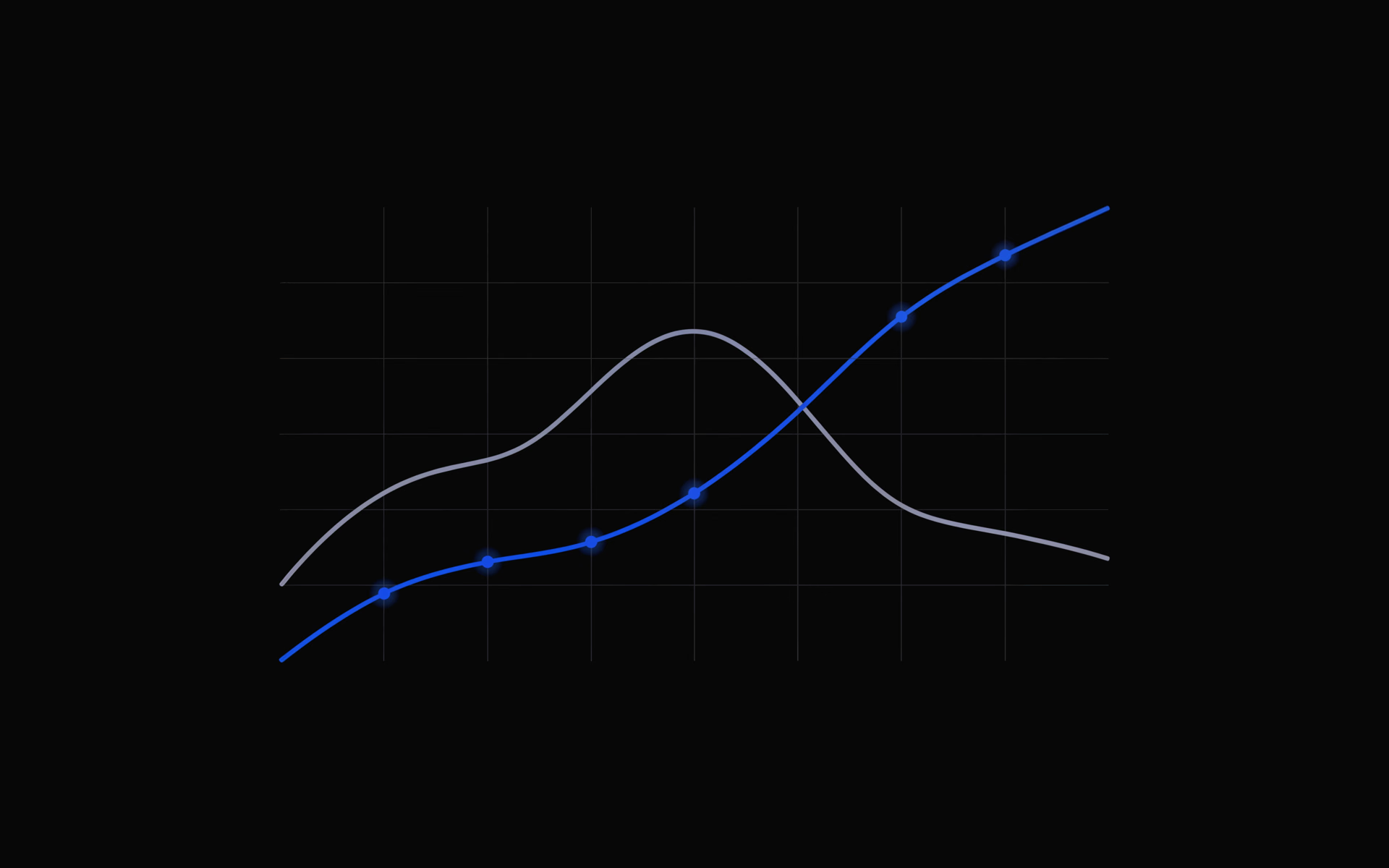
A 70% win rate sounds unbeatable, yet it can still lose money. Here is the win rate vs expectancy math that decides your account, with worked examples.
A 70 percent win rate sounds unbeatable, and that is exactly why it is dangerous. Win rate is the most quoted number in trading and one of the most misleading on its own, because it counts how often you win while saying nothing about how much. Once you put win rate vs expectancy side by side, the illusion breaks. A trader can be right seven times out of ten and still bleed the account dry, while another is wrong more than half the time and compounds steadily. This post shows the math behind that, why the high win rate feels so good, and how to read your own numbers honestly.
How a 70% win rate loses money
Take two traders over ten trades each. The first wins far more often. The second wins less than half the time. Watch what actually happens to the money.
| Trader A | Trader B | |
|---|---|---|
| Win rate | 70% | 40% |
| Average win | $50 | $300 |
| Average loss | $150 | $100 |
| Wins (10 trades) | 7 × $50 = +$350 | 4 × $300 = +$1,200 |
| Losses (10 trades) | 3 × $150 = -$450 | 6 × $100 = -$600 |
| Net result | -$100 | +$600 |
| Per trade (expectancy) | -$10 | +$60 |
Trader A wins almost twice as often and still ends the stretch down 100 dollars. Trader B is wrong six times out of ten and walks away up 600. The win rate pointed at the wrong trader. What separated them was not how often they were right, it was the size of the wins against the size of the losses.
Win rate vs expectancy, the number that decides
The metric that caught what win rate missed is expectancy, the average profit or loss you can expect per trade. It folds together how often you win and how big those wins and losses are, into one number.
The formula is straightforward. Expectancy equals your win rate times your average win, minus your loss rate times your average loss. Run Trader A through it and you get (0.70 × $50) − (0.30 × $150), which is −$10 a trade. Every trade A takes is worth minus ten dollars on average, so more trading just loses faster. Trader B comes out at (0.40 × $300) − (0.60 × $100), or +$60 a trade. Same number of trades, opposite destiny. To run the same math on your own trades, step by step and in a spreadsheet, follow our guide on how to calculate expectancy.
Why a high win rate feels so good
If a high win rate can lose money, why do so many traders chase it? Because being right is emotionally cheaper than being profitable. We are wired to dislike losses more than we enjoy equivalent gains, so the instinct is to lock in a small winner quickly to feel right, and to give a loser room to come back so you don't have to admit it.
Both instincts pump up your win rate and wreck your expectancy at the same time. Cutting winners early shrinks your average win. Letting losers run swells your average loss. Do both often enough and you build Trader A on purpose, a string of satisfying small wins funded by a few quiet disasters. The win rate looks great right up until the equity curve tells the truth.
The four numbers to read together
Win rate is not useless, it is just incomplete. Read it as part of a set, where each number checks the others.
- Win rate tells you how often you win. Start here, but never stop here.
- Average win and average loss tell you the size of each side. Win rate only has meaning once you see these next to it.
- Expectancy combines all three into the average result per trade. This is the one that decides the account.
- Profit factor is gross profit divided by gross loss, a quick cross-check on how many dollars you make for every dollar you lose.
The relationship is the whole point. A low win rate is fine when your risk-reward ratio is high enough, and a high win rate is required when you trade small targets against wider stops. Neither is good or bad until you see the other half.
How to read your own win rate honestly
The fix is not to aim for a different win rate, it is to stop reading it alone. Pull your last few dozen trades and put your win rate next to your average win, your average loss, and your expectancy. If the win rate is high but expectancy is thin or negative, you are very likely cutting winners and nursing losers, and the size of your average loss will give it away.
Then slice it by setup instead of across the whole account, because a blended number hides which strategy is Trader A and which is Trader B. Read any published win rate for a chart pattern the same way, since a respectable hit rate can sit on top of very ordinary follow-through. Our guide to the hammer candlestick pattern works through that exact case. One last caution. Judge samples, not single trades. A handful of trades is noise, and most setups need at least a hundred trades before the read is reliable. Here is how many trades you need to judge a strategy, worked out for common win rates and payoffs. If you are still building the habit underneath all this, our guides on how to keep a trading journal and the weekly trade review process cover how to capture and read these numbers without the spreadsheet busywork.
See your expectancy, not just your win rate
JournalX computes expectancy, win rate, average win and loss, and profit factor for every setup automatically, so you can see which trades actually make money instead of which ones just feel good.
Frequently asked questions
Can you be profitable with a low win rate?
Yes. A trader who wins only 40 percent of the time is profitable as long as the average winner is large enough relative to the average loser. Many trend-following strategies win less than half their trades and still make money because the winners run far longer than the losers.
What matters more, win rate or expectancy?
Expectancy. Win rate only tells you how often you win, not how much. Expectancy combines how often you win with the size of your wins and losses into the average result per trade, which is the number that actually grows or shrinks your account.
What is a good win rate in trading?
There is no single good number, because it depends on your average win versus your average loss. A 40 percent win rate is excellent if your winners are three times your losers, and a 70 percent win rate can be a losing strategy if your losers are much bigger than your winners. Judge win rate next to expectancy, never alone.
How do you calculate expectancy?
Expectancy equals your win rate times your average win, minus your loss rate times your average loss. For a 50 percent win rate with a 200 dollar average win and a 100 dollar average loss, that is 0.5 times 200 minus 0.5 times 100, which is 50 dollars of expected profit per trade.
More articles
Performance & Analytics
How Many Trades Do You Need to
How many trades to evaluate a trading strategy? Usually 100 to 400, not 20. The sample-size math for win rate and expectancy, with a formula for your own numbers.
Risk Management
How Long Can a Good Strategy
How long is a normal losing streak in trading? The expected longest streak by win rate and trade count, what it costs at 1% and 2% risk, and when to worry.